The Answer Might Surprise You!
If you counted the pigeons quickly, there’s a chance you overlooked a few.
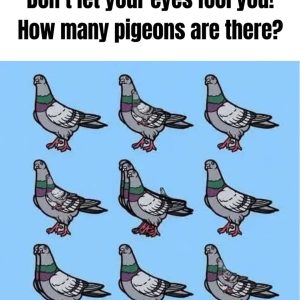
The correct answer is 17 pigeons!
Yes, there are 17 pigeons in the original puzzle, according to its published solution.
But why is this picture so confusing?
The secret lies in how the birds are arranged. Several pigeons appear to overlap, creating the impression that fewer birds are present.
When two similar objects overlap, our brains sometimes interpret them as one larger object rather than two separate ones.
That’s why carefully examining each bird’s head, wings, and feet can help reveal additional pigeons.
How to Count Them Correctly
Start by examining the top row of the picture.
Instead of counting only the large, obvious pigeon shapes, look for smaller details that might indicate another bird.
Pay attention to additional heads, beaks, and feet.
Next, move toward the middle section. This is where overlapping shapes can become particularly confusing.
Finally, examine the bottom row and check whether you’ve missed any partially hidden birds.
A useful technique is to count the birds in small groups rather than trying to count the entire picture at once.
You can also zoom in on the image to examine details that are difficult to see at normal size.
Why Do Our Eyes Make These Mistakes?
Our brains are constantly processing visual information and identifying familiar patterns.
This ability helps us recognize objects quickly, but it can sometimes cause us to overlook small details.
When several similar objects appear close together, our brains may automatically group them into a single pattern.
Visual puzzles take advantage of this natural tendency.
They encourage us to slow down, concentrate, and examine things more carefully.
Although solving these puzzles doesn’t measure intelligence or diagnose eyesight problems, it can be an enjoyable way to practice attention to detail.
Final Answer
There are 17 pigeons in the picture.
If you found all 17 without checking the answer, congratulations on your careful observation!
If your original count was different, try looking at the illustration again.
Now tell us: How many pigeons did you count on your first attempt?
Sometimes the smallest details make the biggest difference!



This Post Has One Comment